
Loading...
Serving Marlborough, MA and surrounding areas. (508) 276-7378
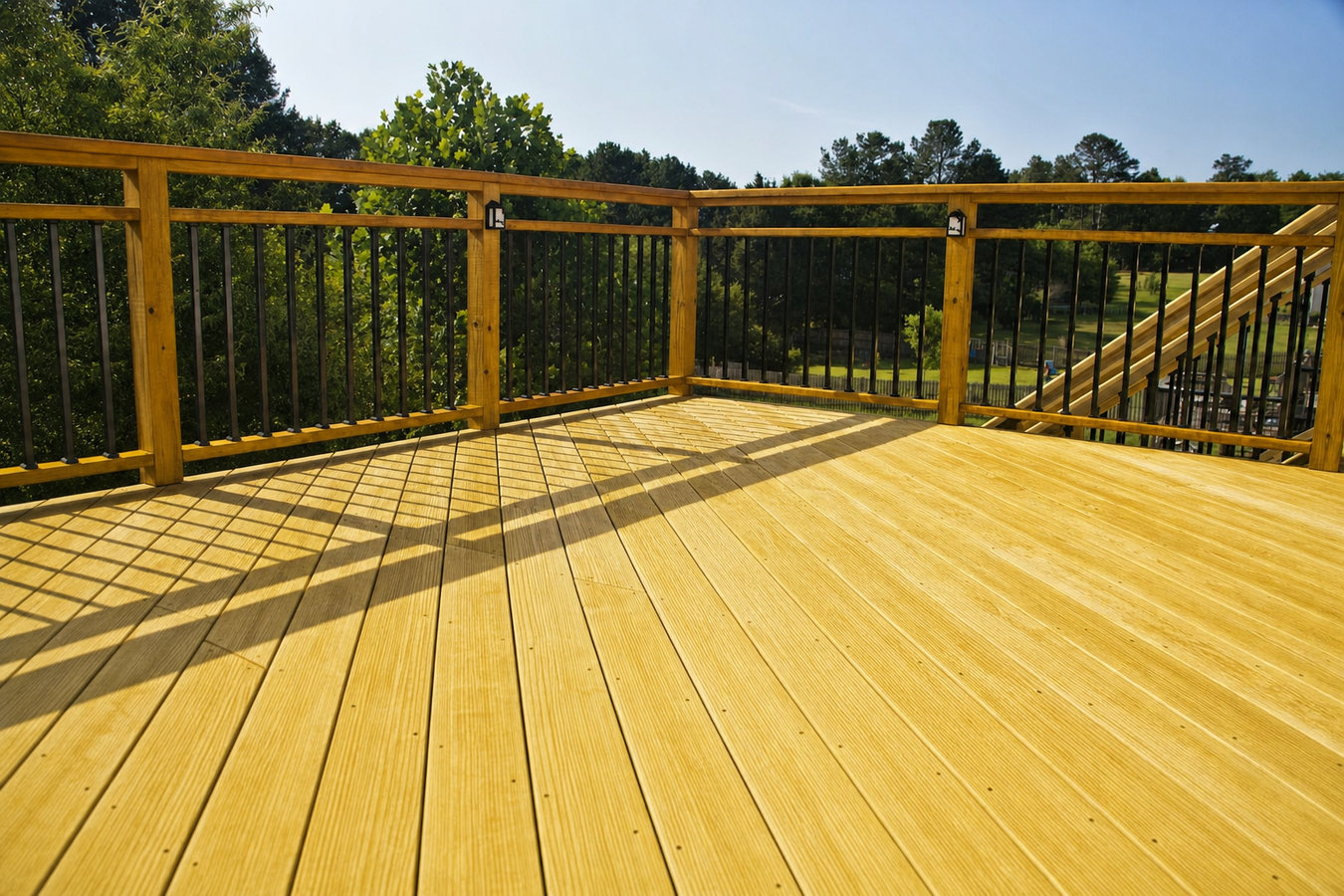
A well-built pressure-treated deck handles everything Marlborough winters throw at it. Permits handled, footings dug to code, and a structure your family can use for decades.
A well-built pressure-treated deck handles everything Marlborough winters throw at it. Permits handled, footings dug to code, and a structure your family can use for decades.
Pressure-treated wood deck construction in Marlborough means a structurally sound outdoor platform built on concrete footings set 48 inches deep, framed with treated lumber, and finished with stainless or hot-dipped galvanized hardware rated for outdoor use. A typical residential deck takes two days to two weeks from permit to final walkthrough, depending on size and complexity.
Pressure-treated lumber has been the dominant deck material in New England for decades, and for good reason: it is rot-resistant, widely available, and costs less upfront than composite alternatives. It does require more ongoing maintenance than composite - plan on cleaning annually and applying a UV-blocking sealant every two to three years. The American Wood Protection Association sets the treatment standards that govern the lumber used in every deck we build.
If you are weighing wood against composite, our cedar wood deck construction page covers the natural wood alternative. And if you want to skip maintenance entirely, our deck staining and sealing service can extend the life of an existing pressure-treated deck before you decide whether to replace it.
If you press down on a deck board and it gives slightly, or if you can push a screwdriver into the wood with little resistance, the wood has rotted from the inside. This is especially common on decks in Marlborough that are 15 or more years old and have not been regularly sealed - the wet winters and humid summers here accelerate wood decay. A deck with soft boards is not just an eyesore. It is a safety hazard.
Older decks in Marlborough - particularly those built before the 1990s - were often constructed with posts buried directly in the soil. In New England's wet climate, buried wood posts rot from the bottom up, and by the time you see visible damage above grade, the structural damage below is often severe. If you are not sure how your posts are set, a builder can check this quickly during a free site visit.
If you are not sure whether your existing deck was ever permitted, this is worth checking before you list your property. Unpermitted decks in Marlborough can delay or complicate a home sale - buyers' inspectors routinely flag them, and lenders sometimes require the issue resolved before closing. Building a new, properly permitted deck resolves this cleanly.
Look at where your deck meets the side of your house. If you can see a gap between the deck frame and the house, or if the deck shifts slightly when you walk near that edge, the ledger connection has likely failed. This is a structural issue that worsens quickly - especially through a Marlborough winter where freeze-thaw cycles put repeated stress on the connection.
We handle the entire project from first permit application to final city inspection. That means submitting plans to the Marlborough Building Department, digging footings to the required frost depth, pouring concrete, building the structural frame with treated lumber, and installing decking boards with properly rated hardware. Railings, stairs, and any built-in features are part of the quoted scope - not line items added later.
Before we build anything, we do a thorough site assessment: checking the ledger attachment point on your house, looking at the yard grade, and identifying anything that could affect cost or timeline. That assessment is how we catch issues like compromised ledger boards or buried utility lines before work begins - not after. If your project grows over time, our cedar wood deck construction service is a natural next step for homeowners who want a premium wood alternative. And if your deck needs protective finishing after construction, our deck staining and sealing team handles that as a separate service once the lumber has had 60 to 90 days to dry.
Suits most Marlborough colonial and cape homes with a first-floor back door close to grade.
For homes where the back door is several feet above grade - common in Marlborough split-levels and raised ranches.
For homeowners replacing an existing structure, including assessment and replacement of any compromised ledger boards.
Marlborough sits in central Massachusetts where the ground freezes to roughly 48 inches each winter. That frost depth is the single most important site condition governing how decks are built here - footings that do not reach below that line will be pushed out of the ground by freeze-thaw cycles, causing the whole structure to shift and crack. This is non-negotiable under Massachusetts building code, and it adds excavation labor that contractors from warmer regions often underestimate. Beyond footings, New England's temperature swings - from humid heat in July to well below freezing in January - mean deck boards and framing need to be installed with proper spacing and hardware that accounts for seasonal wood movement, a standard that contractors who build pressure treated wood decks in warmer climates do not always carry over when quoting in New England.
Much of Marlborough's housing stock was built between the 1950s and 1990s, and many of those homes have older ledger boards that need to be assessed - and sometimes replaced - before a new deck can be safely attached. We work throughout Marlborough and in neighboring communities including Shrewsbury and Southborough, where the same housing age and frost conditions apply. Our site assessments account for all of this before we give you a price.
We respond within one business day. A site visit follows - we walk your yard, measure the space, check the ledger attachment point, and discuss size, materials, and budget. You receive a written estimate within a few days of that visit.
Once you sign, we submit the permit application to the Marlborough Building Department - a process that typically takes one to three weeks. During that time, materials are ordered and you are placed on the build schedule. No work starts until the permit is in hand.
We dig footing holes to at least 48 inches, pour concrete, and allow 24 to 48 hours for curing. Then the posts, beams, and deck frame go in. This is the most labor-intensive phase and typically takes one to three days for a standard deck.
Boards are installed, then railings and stairs. The Marlborough Building Department inspector visits to sign off on the finished structure. Once the inspection passes, the deck is yours to use. We do a final walkthrough and explain the 60-to-90-day wait before your first sealant application.
Free site visit, no obligation. We respond within one business day.
(508) 276-7378We carry a Massachusetts Home Improvement Contractor registration and a Construction Supervisor License - both required by state law for this type of work. You can verify both on the state's website before signing anything. These credentials give you access to the state's arbitration program if a dispute ever arises.
We submit the permit application to the Marlborough Building Department and coordinate both required inspections - after footings and at completion. Your deck is on record as a legal structure before we leave, which protects you at home sale and with your homeowner's insurance.
Every deck we build has footings at least 48 inches deep - the frost line requirement for Marlborough and central Massachusetts. We use metal post bases anchored to concrete, not posts buried in soil. The result is a deck that stays level and stable for decades, not one that shifts after the first hard winter.
We have built decks in Marlborough, Northborough, Southborough, Hudson, and across MetroWest since 2020. That means we can point you to completed projects in your own area - homeowners you can actually call before you commit. That kind of local accountability is something any reputable contractor should be able to offer.
Hiring a deck builder is a long-term decision - this structure will be attached to your home for decades. Every credential and process listed above is something you can independently verify, and we encourage you to do exactly that before you choose anyone for this job.
Learn more: Massachusetts Home Improvement Contractor program and North American Deck and Railing Association
For homeowners who want the warmth and character of natural wood with better natural rot resistance than pressure-treated lumber.
Learn MoreProtective finishing for new or existing pressure-treated decks - applied after the lumber has had time to dry and season.
Learn MoreReputable builders in this area book out by March - reaching out now gets you on the calendar before the summer rush. Free estimate, no pressure.