
Loading...
Serving Marlborough, MA and surrounding areas. (508) 276-7378
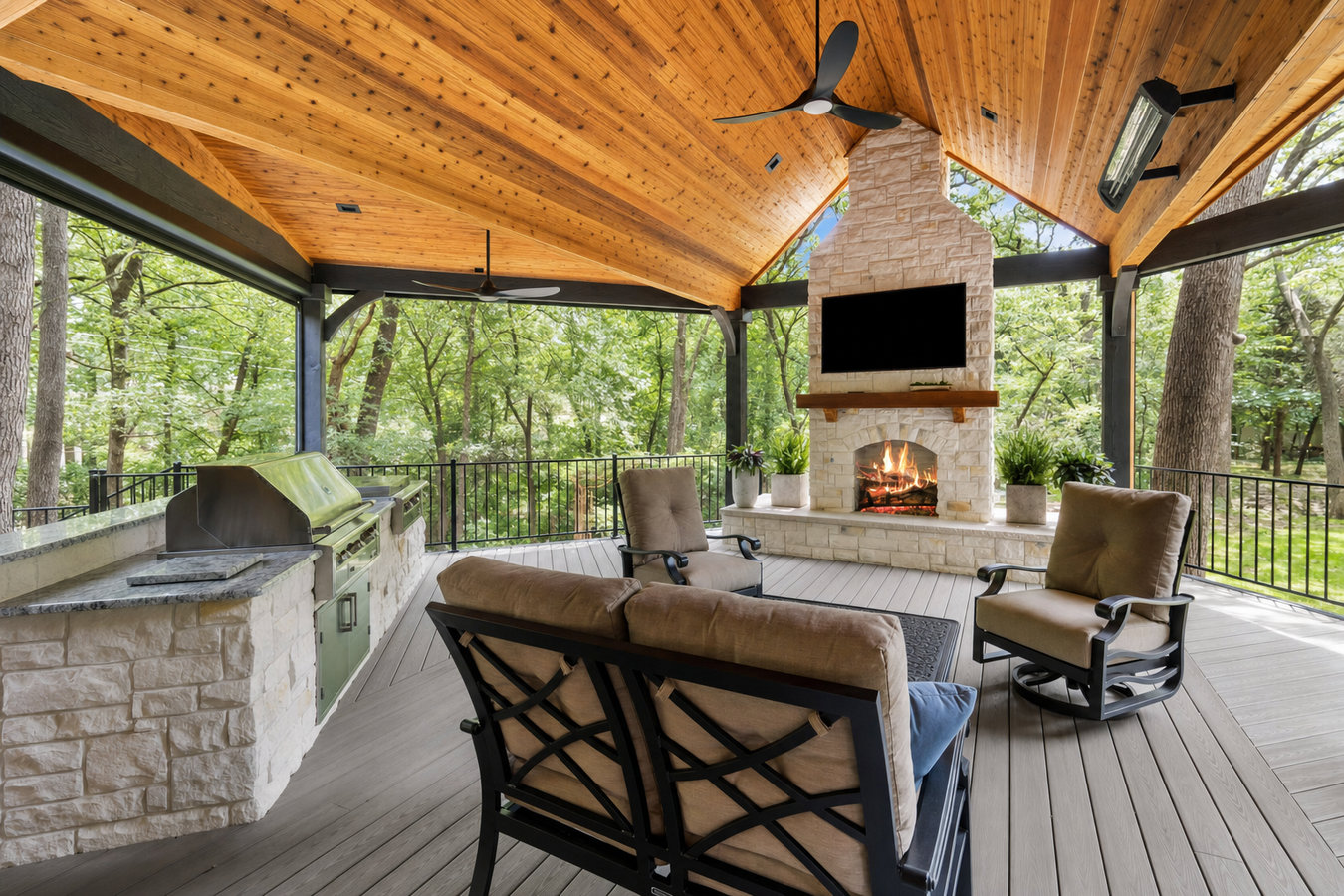
Marlborough Deck & Fence is the deck builder Ashland, MA homeowners call for covered deck installation, custom deck design and build, composite decking, and fence installation across the town's wide mix of housing ages - and we serve Ashland regularly, with direct experience on properties ranging from the older Victorians and mid-century ranches near the Route 135 town center to the newer Colonial subdivisions on the north side. We reply to new inquiries within one business day and provide written quotes before any work begins.
Ashland homeowners lose a significant part of the outdoor season to rain, and the town's wet springs and frequent summer thunderstorms cut outdoor time on decks that have no roof. Our covered deck and patio cover installation addresses that directly - a properly framed roof structure built to Massachusetts snow load requirements so you can use the space from spring through late fall without watching the weather forecast first.
Ashland's housing mix presents unusual variety in a single town - the older homes near the Route 135 town center have different lot grades, door heights, and foundation types than the 1990s Colonials in the newer subdivisions off Route 126. A custom design addresses the specific property rather than adapting a standard plan that was not drawn for your lot.
Many Ashland properties have mature trees and wooded lot boundaries that keep portions of a deck in shade for much of the day. Shaded deck surfaces stay damp longer after rain, which accelerates mold growth and surface degradation on wood decking. Composite boards resist moisture absorption and do not develop the gray, weathered surface that unprotected wood shows on shadier Ashland lots within a few seasons.
Ashland's 1980s and 1990s Colonials have decks that are now 30 to 45 years old, and some of the older homes near the town center have structures considerably older than that. Ashland's freeze-thaw winters and wet spring soil conditions both accelerate wood decay in ledgers, post bases, and structural connections that look sound from above but have compromised framing underneath.
Ashland's denser neighborhoods near the town center and along the MBTA commuter rail corridor have lots where privacy fencing between properties is common and practical. Posts set at 48 inches - below the frost line for this region - stay plumb through repeated freeze-thaw cycles that push shallower-set posts visibly out of alignment within a few seasons.
Ashland has several ponds, wetlands, and conservation corridors throughout town, and properties near these areas deal with real mosquito and insect pressure from late May through September. A screened enclosure extends the usable season on those lots by turning an open deck into a protected outdoor room - particularly valuable for homes near Ashland State Park or the conservation land along Stone Street.
Ashland was incorporated in 1846 and has a housing stock that spans more than 175 years - from 19th-century Victorians and Greek Revivals near the historic town center to postwar ranches and split-levels built in the 1950s and 1960s, to 1980s and 1990s Colonials in newer subdivisions off Route 126 and Route 135. That range of home ages means every project in Ashland requires a different approach. Attaching a covered deck to a late-1800s home with balloon-frame construction and original siding is a fundamentally different task than attaching one to a 1994 Colonial with modern platform framing and vinyl siding - and a contractor who treats them the same will eventually create problems at the connection point.
Ashland also sits in a low-lying part of MetroWest with several ponds, the Sudbury River tributary network, and the Ashland Reservoir nearby. Spring snowmelt and April rains saturate the soil quickly, and properties near wetland buffers or in low-lying areas see elevated water tables for weeks at a time. That soil moisture keeps frost depth a real structural issue - footings that do not reach the 48-inch minimum will move - and it accelerates wood decay in any post base or ledger that stays in contact with wet soil or wet siding. Covered structures that shed water away from the house framing are not just a comfort upgrade in Ashland; they are also a form of structural protection for the property.
Our crew works throughout Ashland regularly, and the range of housing ages across town is something we encounter on nearly every block. Older homes near the Route 135 corridor - some within a few blocks of the Ashland commuter rail station - often require a ledger inspection before we quote any work, because original framing and siding materials on older homes can have hidden moisture damage that only shows once you pull back the surface. We build that step into our assessment process for any property where the home predates 1980.
Ashland is part of the MetroWest region and borders Framingham, Natick, Hopkinton, and Holliston. The town center runs along Route 135, and most of the newer residential development fills in the areas north and south of that corridor. Ashland State Park on the southwestern edge of town sits adjacent to the Ashland Reservoir, and many properties in that part of town are the ones with the heaviest tree canopy and the most pronounced spring drainage challenges.
We also work in neighboring Marlborough to the northwest and Framingham to the east, where similar housing age patterns create similar project profiles. If you have neighbors who have used us in either town, that is likely why we are already familiar in Ashland neighborhoods along the border.
Call us or send a message and we respond within one business day. We ask a few quick questions about the project and schedule a site visit - no commitment required at this stage.
We visit your Ashland property to measure, check the existing framing condition if attaching to the house, and assess drainage and soil conditions. For older homes near the town center, we inspect the ledger area before finalizing any quote. You receive a written, itemized estimate - not a range - before committing to anything.
We file the permit application with the Ashland Building Department and manage the review timeline. Permit approval adds two to four weeks before construction starts - we account for this in the project schedule so there are no surprises about your start date.
The crew works daily, cleans up each evening, and we coordinate the building inspection before the project is considered complete. The final walkthrough covers what to expect in the first winter - how the roof handles snow load, where water drains, and what routine maintenance looks like for your specific structure.
We serve Ashland homeowners from the older neighborhoods near Route 135 to the newer subdivisions off Route 126. Call or send a message and we respond within one business day.
(508) 276-7378Ashland was incorporated in 1846 and has about 17,000 residents today. It is part of the MetroWest region, with Route 135 running through the historic town center and the MBTA Framingham/Worcester commuter rail line stopping right in town - making it a practical choice for Boston-area commuters who want more space than the inner suburbs offer. The town is mostly owner-occupied single-family homes, and its housing stock spans an unusually wide range: 19th-century Victorians and Greek Revivals near the center, postwar ranches and split-levels from the 1950s and 1960s, and 1980s through 2000s Colonials and Capes in the newer subdivisions. Median home values hover around $530,000, and most residents invest in maintaining their properties over the long term rather than making the cheapest short-term fix.
Much of the landscape around Ashland's residential neighborhoods is wooded, with mature trees and conservation land bordering many lots. The Ashland Reservoir and Ashland State Park anchor the southwestern part of town, and ponds, wetlands, and stream corridors run throughout the rest. That natural setting is a genuine selling point for buyers, but it also means tree roots, shade, and spring drainage are factors on most outdoor projects. Ashland borders Natick to the north, where a similar combination of older housing stock, suburban wooded lots, and wetland proximity creates comparable project conditions.
Get a one-of-a-kind deck designed and built to fit your home perfectly.
Learn MoreEnjoy a beautiful, low-maintenance composite deck that lasts for decades.
Learn MoreInstall a premium Trex deck that resists fading, staining, and scratching.
Learn MoreBuild a sturdy, affordable pressure-treated wood deck built to last.
Learn MoreAdd natural warmth and beauty to your yard with a cedar wood deck.
Learn MoreProtect and refresh your deck with professional staining and sealing.
Learn MoreIncrease privacy and curb appeal with a quality wood fence.
Learn MoreEnjoy your outdoor space bug-free with a professionally screened porch.
Learn MoreStay comfortable outside year-round with a custom covered deck.
Learn MoreFrom covered decks and patio covers to custom builds and fence installation, we work across all of Ashland's neighborhoods and home ages. Reach out and hear back within one business day.